

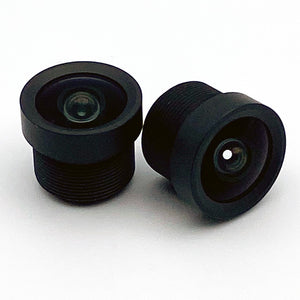
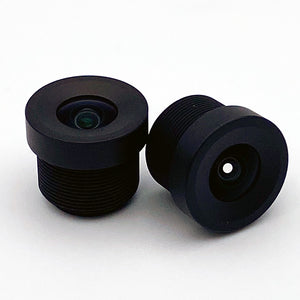
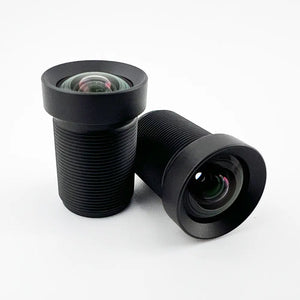
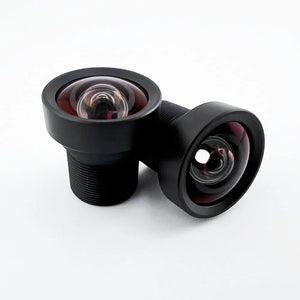
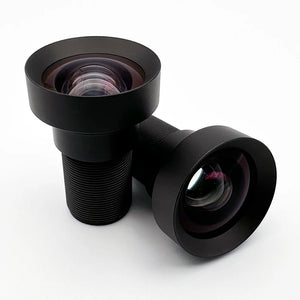
So wählen Sie ein M12-Objektiv für Smart-Retail-Kameras aus
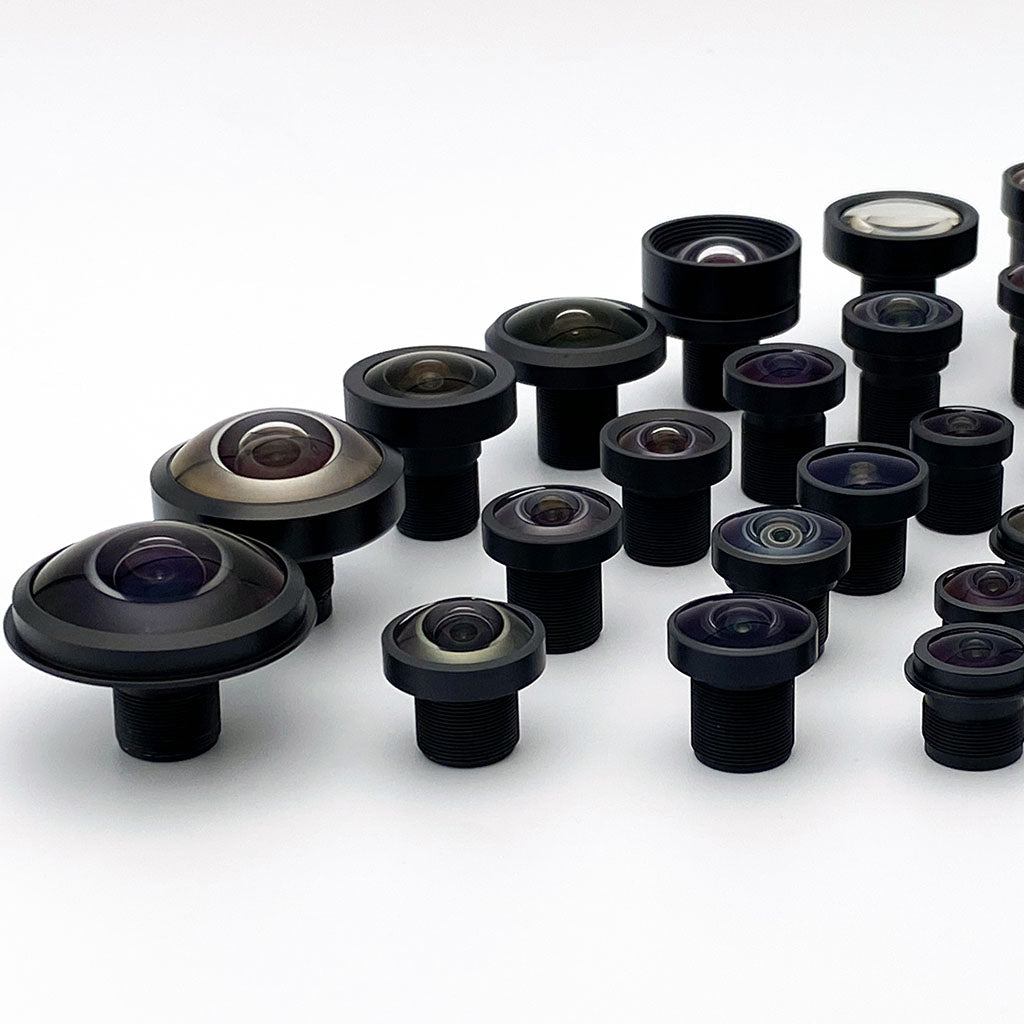
Die Bildverarbeitung im Einzelhandel lässt sich in zwei optische Probleme unterteilen. Das eine ist die Abdeckung: Mit möglichst wenigen Kameras den gesamten Verkaufsraum oder Gang erfassen. Das andere ist die Lesbarkeit: Genügend scharfe Pixel auf einem Barcode, einem Preisschild oder einem Gesicht bereitstellen, damit das Modell diese erkennen kann. Fisheye- und geradlinige Objektive liegen an den entgegengesetzten Enden dieser Bandbreite, und in den meisten Ladenkonzepten kommen beide zum Einsatz.
Sichtfeld im Vergleich zur Lesbarkeit von Details
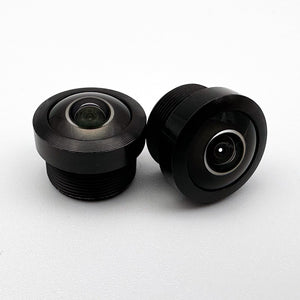
Bei Überwachungsaufgaben sind Weitwinkelobjektive von Vorteil. Ein 190°- bis 230°-Fischaugenobjektiv an der Decke deckt einen Bereich ab, für den sonst drei oder vier Kameras mit engem Blickwinkel erforderlich wären – weshalb Personenzähl- und Heatmap-Systeme darauf zurückgreifen. Bei Erkennungsaufgaben ist das Gegenteil von Vorteil. Mit jedem Grad, um den Sie den Bildwinkel vergrößern, verteilen sich die gleichen Sensor-Pixel auf einen größeren Bildausschnitt, sodass ein Barcode oder ein Regaletikett auf weniger Pixel fällt. Wählen Sie die längste Brennweite, mit der der Ladentisch oder das Regal noch vollständig im Bild ist, und nicht die breiteste, die gerade noch passt.
Verzerrung ist ein Kriterium für die Lesbarkeit, kein Kriterium für das Aussehen.
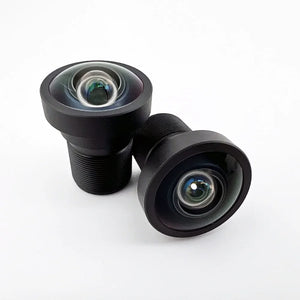
Barrel distortion (negative TV distortion) bows straight lines outward and compresses the scale near the frame edge. For a person-counting fisheye that is fine, because the analytics run on calibrated geometry. For OCR it costs two things: local sampling drops where the field is compressed, so edge characters and barcode bars land on fewer pixels, and any stage that assumes a rectilinear image has to be calibrated or retrained. Trained detectors and calibrated decoders can work from the distorted image instead, so this is rarely a hard yes or no. Low-distortion and no-distortion designs remove the question by holding lines straight across the field. Undistorting in software is the third route: it works only as well as its calibration and adds a step to every frame. Set the residual distortion you need from a decode-rate test on your own labels.
Sensorabdeckung und Bildkreis
A lens only fills a circle of light, and that image circle has to reach the corners of your sensor or they go dark. The rectilinear lenses here publish image circles from 6.8mm to 9.0mm as designed, so check the lens you pick against your own sensor diagonal rather than the group: the AR0234 (6.79mm diagonal) sits at the low end of that span, and the large-format 5.5mm (CIL056) reaches a bigger frame. The fisheyes work the other way. Their circles run 2.9mm to 4.7mm, and the round image lands whole inside the frame with dark corners around it only when the sensor short axis is wider than the circle. The AR0234 short axis is 3.60mm, so every fisheye here except the 2.9mm overfills it and the imaged field is cropped.
Schwaches Licht, IR und 24/7-Betrieb
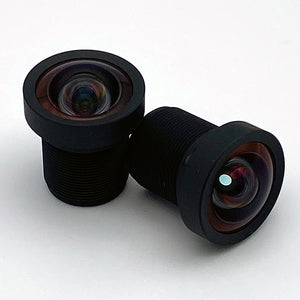
An den Eingängen und in den Lagerräumen herrscht rund um die Uhr Betrieb, daher spielen Blende und IR-Verhalten eine wichtige Rolle. Ein lichtstarkes Objektiv wie das 6-mm-Objektiv mit F/1,7 (CIL059) nimmt pro Belichtung mehr Licht auf als ein lichtschwächeres. Kameras, die nachts auf Nahinfrarot-Strahler umschalten, benötigen ein IR-korrigiertes Objektiv: Es hält den Fokus zwischen dem sichtbaren und dem Nahinfrarotbereich, während ein gewöhnliches Objektiv den Fokus verschiebt und unscharf wird. Das 190°-IR-korrigierte Fischaugenobjektiv (CIL215) und das IR-korrigierte 4,4-mm-Objektiv (CIL046) sind speziell für diesen Wechsel ausgelegt.
Abdichtung und Umwelt
Cold aisles, vestibules, and outdoor-facing entrances see condensation, dust, and splash. IP67-rated variants such as the CIL034 and the 6mm CIL059 are dust-tight and pass 30-minute immersion in still water under IEC 60529, for that lens variant in the mounting configuration tested. That is the whole exposure the mark certifies. Reading it across to the incidental splash a cold aisle produces is engineering judgment about the seal rather than a test result, since IPX7 is immersion alone and does not pass the separate IPX3 and IPX4 spray tests.
Two limits come with that. The rating stops at the lens barrel, so the camera body, connector, and cable exit need their own sealing before the assembly carries any rating. And directed washdown falls under the separate IPX5, IPX6, or IPX9 exposures, while condensation inside a sealed cavity is a humidity and thermal-cycling problem that no IP digit addresses.
Montage und Integration
M12 is a 12mm x 0.5mm thread, also called S-mount. It is a thread specification rather than a camera-mechanics standard, so the compute platform behind the sensor settles nothing about fit. These lenses screw into M12 holders on modules from ArduCam, e-con Systems, and Leopard Imaging, including the boards that carry AR0234, IMX290, and similar sensors behind NVIDIA Jetson and Raspberry Pi. Match the holder height and back focal length so the sensor lands in the focal plane, confirm the image circle covers the sensor diagonal, check the lens chief ray angle against the sensor microlens profile, and set focus against the actual scene distance before you lock the thread.