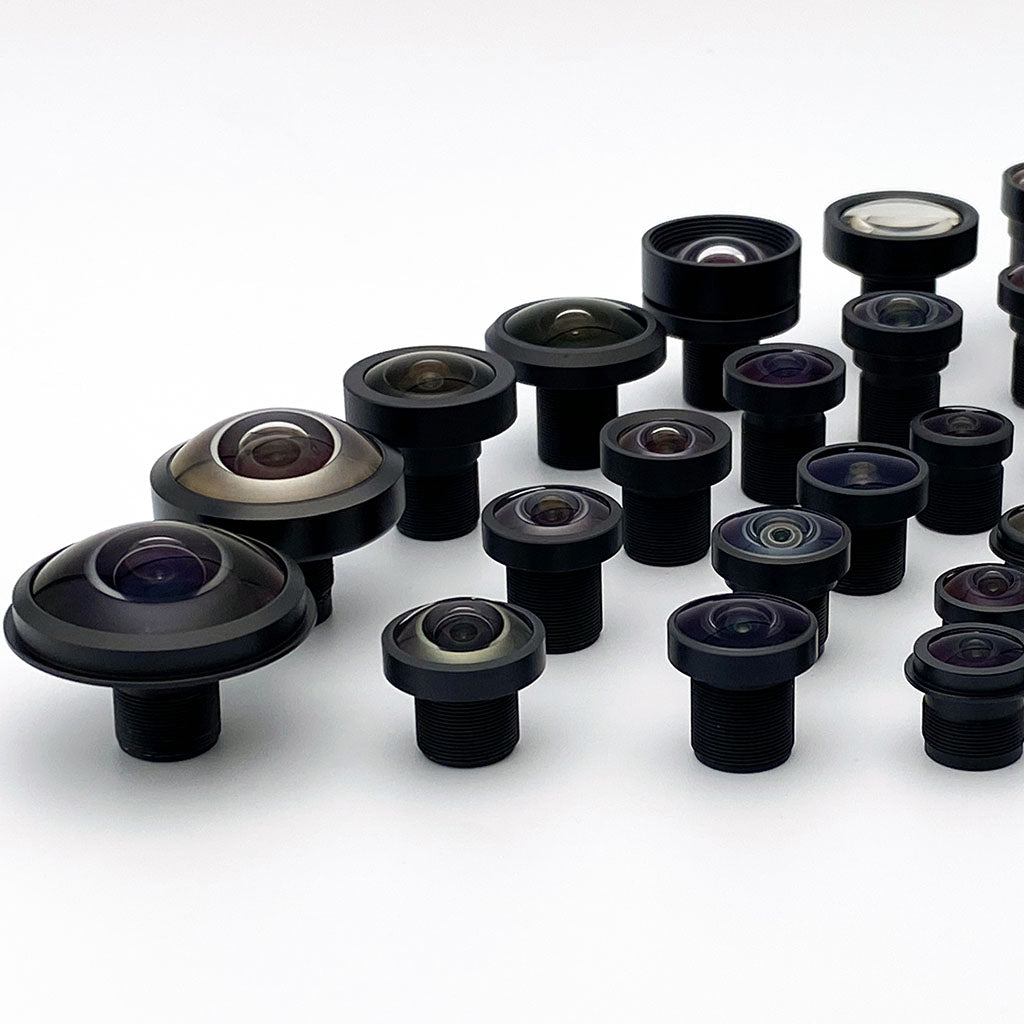

Umwelt- und Zuverlässigkeitsprüfungen für Elektronik, Kameras und Objektive
Bei Umweltbelastungsprüfungen handelt es sich um eine Reihe kontrollierter Belastungstests, mit denen überprüft wird, ob Ihre Produkte den realen Einsatzbedingungen standhalten, darunter extreme Temperaturen, Feuchtigkeit, Staub, Vibrationen und korrosive Umgebungen.
Our San Diego facility provides product reliability testing services for electronics, sensors, enclosures, camera modules, and optical assemblies. From ingress protection testing (IP67 under IEC 60529, IPX9K under ISO 20653) to rapid temperature change and salt spray corrosion, our in-house equipment delivers traceable results with full documentation. Customers are welcome to visit our facility to observe testing in progress.

Prüfmöglichkeiten zur Produktzuverlässigkeit
Unser Testlabor in San Diego verfügt über Geräte für Umwelt- und Zuverlässigkeitsprüfungen zur Überprüfung der Produktlebensdauer. Von Thermoschocktests bis hin zu Schutzartprüfungen unterstützt es Anwendungen in den Bereichen Automobilindustrie, Industrie, Robotik und Unterhaltungselektronik.
IPX9K – Hochdruck-Wasserstrahl
Prüflabor für Schutzarten, zugelassen für Wasser mit einer Temperatur von 80 °C bei einem Druck von 80–100 bar gemäß ISO 20653
IP6X – Schutz vor dem Eindringen von Staub
Staubdichtheitsprüfung in unserem Prüflabor für Schutzarten gemäß IEC 60529
Thermoschockprüfung
Two-chamber thermal shock testing from -40°C to +85°C with <10 sec transfer
Salznebelkorrosion
Prüfung gemäß ASTM B117 / ISO 9227, 24–1000+ Stunden
Schwingungsprüfung
Elektrodynamischer Schwingungserreger, Frequenzbereich 5–2000 Hz
Xenon-UV-Bestrahlung
Vollspektrum-beschleunigte Bewitterung
Temperaturwechselprüfung
Konstanttemperaturkammer von -40 °C bis +125 °C
Verschleiß- und Härtetests
Linear abrasion, plus ASTM D3363 pencil hardness for coating film hardness
Air Tightness Leak Screening
Pressure decay leak screening for end-of-line seal checks, not an IEC 60529 immersion test
Prozess zur Prüfung der Umweltbeständigkeit
Von der ersten Beratung bis zum Abschlussbericht liefert unser Prüflabor rückverfolgbare Ergebnisse. Ganz gleich, ob Sie Thermoschockprüfungen, Schutzartprüfungen oder Korrosionsbewertungen benötigen – unser Verfahren gewährleistet eine lückenlose Dokumentation.
Anforderungsprüfung
Legen Sie gemeinsam mit unserem Entwicklungsteam Prüfstandards, Abnahmekriterien und Probenmengen fest. Definieren Sie Parameter für Thermoschockprüfungen, Anforderungen an Schutzartenprüfungen oder andere Umweltprüfungen.
Ausgangsmessung
Eine Funktions-, Maß- oder optische Prüfung vor der Umweltexposition dient zur Festlegung einer Leistungsbasis.
Umwelteinflüsse
Die Proben werden unter festgelegten Prüfbedingungen – wie beispielsweise Thermoschock, Schutzart, Salznebel oder anderen Umweltbelastungen – einer Echtzeitüberwachung unterzogen.
Überprüfung nach dem Test
Führen Sie die Funktions- und Sichtprüfungen erneut durch, um etwaige Verschlechterungen zu quantifizieren. Erstellen Sie einen Prüfbericht mit Fotos und Daten.
Angebote für Zuverlässigkeitsprüfungen von Produkten
Umweltbelastbarkeitstests sind eine kostenpflichtige Dienstleistung. Die Preise richten sich nach Ihren individuellen Anforderungen:
Wir erstellen Ihnen detaillierte Angebote mit transparenten Preisen und ohne versteckte Gebühren. Gerne bieten wir Ihnen eine Besichtigung unserer Räumlichkeiten an, bei der Sie sich die Ausrüstung ansehen und Ihr Projekt persönlich mit uns besprechen können.
Individuelles Angebot anfordernIPX9K-Prüfung der Schutzart
The IPX9K designation comes from ISO 20653, the road-vehicle enclosure standard, and the K belongs to that standard alone; a road-vehicle enclosure that is dust-tight and also passes the close-range jet is coded IP6K9K there. IEC 60529 specifies its own close-range jet separately, as IPX9, with no K in the code. Both direct heated liquid water at the enclosure, and neither one sprays steam. Our chamber runs jets at 80°C and up to 100 bar, an exposure that loads seals differently from the still-water immersion behind IP67 rather than sitting above it on one scale.
For electronics and sensors in automotive, agricultural equipment, outdoor robotics, and industrial machinery, IPX9K testing verifies that seals withstand high-pressure, high-temperature water jets representative of industrial cleaning, so moisture ingress failure modes such as corrosion, component failure, and optical fogging can be caught before deployment. ISO 20653:2023 is the current edition and the one we quote against unless your test plan names a different one, and the report states which edition was run. The sample is fixed to a turntable rotating at about 5 revolutions per minute and takes the jet from four elevations, 0, 30, 60, and 90 degrees, for 30 seconds at each. The result applies to the sample as submitted, in the mounting configuration tested, and pass or fail is judged against the acceptance wording of the edition cited in the test plan.
| Parameter | Spezifikation |
|---|---|
| Wassertemperatur | 80 °C ± 5 °C |
| Wasserdruck | 8–10 MPa (80–100 bar) |
| Durchflussmenge | 14–16 l/min |
| Düsenabstand | 10–15 cm |
| Sprühdauer | 30 Sekunden pro Einstellung |
| Mounting | Turntable at approximately 5 r/min, jets at 0, 30, 60, and 90 degrees |
| Acceptance | Judged per the acceptance wording of the cited edition, for the sample as mounted |
| Normen | ISO 20653:2023 (IP6K9K and IPX9K, road vehicles); IEC 60529 (IPX9), cited separately |

Zweikammer-Thermoschockprüfung
Rapid temperature change reveals weaknesses in assemblies that gradual cycling cannot detect. Our lab transfers samples between -40°C and +85°C air chambers in under 10 seconds, creating differential thermal expansion that stresses solder joints, adhesive bonds, seals, and material interfaces. An air-to-air transfer of this kind is the rapid change-of-temperature procedure of IEC 60068-2-14 Test Na. It is not JEDEC JESD22-A106, the liquid-to-liquid thermal shock method, and JESD22-A104 is temperature cycling rather than shock, so name the method and condition your specification calls for and we will run to it.
Typical failures discovered during thermal shock testing include solder crack propagation, seal compression set, plastic warping, and delamination. For optical components, it also reveals coating separation and cement failure in bonded elements. Our lab can include functional verification before and after exposure, which feeds the data package an automotive customer assembles. AEC documents are written per component class, such as AEC-Q104 for multichip modules, and the qualification itself belongs to the component or module maker rather than to a test house.
| Parameter | Spezifikation |
|---|---|
| Kaltkammer | -40 °C |
| Heißkammer | +85 °C |
| Übertragungszeit | <10 seconds |
| Verweilzeit | 15 Minuten bis 2 Stunden (programmierbar) |
| Zykluszählung | Bis zu 1000+ Zyklen |
| Normen | IEC 60068-2-14 Test Na (rapid change of temperature); JEDEC JESD22-A104 (temperature cycling) |
Salzsprühnebel-Korrosionsprüfung
Salzsprühtests beschleunigen Korrosionsprozesse, um Schutzbeschichtungen, die Qualität der Eloxierung und die Materialverträglichkeit in Meeres- oder Streusalzumgebungen zu bewerten. Die kontinuierliche Salznebelumgebung deckt Beschichtungsfehler, galvanische Korrosion und die Zersetzung des Untergrunds schnell auf.
Dieser Test ist für Automobil-Außenbauteile, Gehäuse für den Außenbereich sowie alle Produkte, die in Küstengebieten oder im winterlichen Straßenverkehr eingesetzt werden, unverzichtbar. Wir begutachten die Proben in regelmäßigen Abständen während der gesamten Testdauer und dokumentieren den Verlauf fotografisch.
| Parameter | Spezifikation |
|---|---|
| Salzlösung | 5 % NaCl (Natriumchlorid) |
| Kammertemperatur | 35 °C ± 2 °C |
| Belichtungsdauer | 24 bis über 1000 Stunden |
| Sprühmodus | Anhaltender Nebel |
| Normen | ASTM B117, ISO 9227 |
Prüfung des Staubschutzes nach IP6X
IP6X dust ingress protection testing checks that dust cannot enter an enclosure. IEC 60529 sets the conditions by enclosure category: a category 1 enclosure, whose duty cycle draws air inward, is tested inside the dust chamber with a vacuum applied to it, while a category 2 enclosure is tested in the same chamber without extraction. We run the clause that matches your enclosure category rather than a fixed house recipe.
Ingress protection testing for dust matters for electronics deployed in dusty industrial environments, construction sites, agricultural applications, and desert climates. IP6X passes only when no dust has entered the enclosure, judged against the acceptance wording of the standard for the category tested.
| Parameter | Spezifikation |
|---|---|
| Testmedium | Talcum powder per IEC 60529 |
| Belichtungsdauer | Per the IEC 60529 clause for the category, up to 8 hours |
| Druckdifferenz | Vacuum applied for category 1 enclosures; none for category 2 |
| Bestehenskriterien | No dust ingress, judged per IEC 60529 |
| Normen | IEC 60529 (IP6X) |

Schwingungsprüfung
Vibration testing evaluates mechanical durability under simulated transportation and operational conditions. Our electrodynamic shaker system supports both sinusoidal sweep and random vibration profiles to replicate automotive, shipping, and industrial vibration environments. Sinusoidal sweeps follow IEC 60068-2-6. Broadband random profiles follow IEC 60068-2-64, the separate standard for random excitation.
Die Tests dienen der Ermittlung von Resonanzfrequenzen, der mechanischen Ermüdung, der Zuverlässigkeit der Steckverbinder und der Befestigungsfestigkeit. Bei optischen Komponenten können Vibrationen zu einer Dezentrierung der Elemente, einer Fokusverschiebung oder Beschädigungen der Beschichtung führen, was die Bildqualität beeinträchtigt.
| Parameter | Spezifikation |
|---|---|
| Frequenzbereich | 5–2000 Hz |
| Schwingungsart | Sinus-Sweep, Zufall |
| Achsen | Dreiachsig (sequenziell) |
| Shaker-Typ | Elektrodynamisch |
| Normen | IEC 60068-2-6 (sine), IEC 60068-2-64 (random), MIL-STD-810 Method 514 |
Xenon-Arc-UV-Belichtungstest
Die Xenon-Bogen-Bewitterung beschleunigt die Auswirkungen der Sonneneinstrahlung auf Kunststoffe, Beschichtungen und Klebstoffe. Die Vollspektrum-Xenonlampe simuliert naturgetreu das natürliche Sonnenlicht, einschließlich der UV-A- und UV-B-Wellenlängen, die zu einer Materialalterung führen.
Testing reveals yellowing, chalking, cracking, and adhesion loss in housing materials and optical coatings. Combined with humidity and temperature cycling, xenon exposure compresses the timeline, but accelerated weathering has no universal conversion to outdoor years. The factor depends on the filter set, irradiance, spectral match, the temperature and humidity cycle, the material, and the failure mode. Reading test hours as service years takes a correlation established for your material against field or reference data.
| Parameter | Spezifikation |
|---|---|
| Lichtquelle | Xenon-Bogenlampe |
| Spektrum | Vollspektrum (UV-A, UV-B, sichtbares Licht) |
| Temperaturregelung | Ja |
| Feuchtigkeitsregelung | Ja |
| Normen | ASTM G155, ISO 4892-2 |
Temperaturwechsel und konstante Temperatur
Durch Temperaturwechsel- und Dauerbelastungstests wird die Leistungsfähigkeit des Produkts über den gesamten Betriebstemperaturbereich validiert. Im Gegensatz zum Thermoschock werden bei Temperaturwechselprüfungen kontrollierte Anstiegsraten verwendet, die ein thermisches Gleichgewicht ermöglichen und so verschiedene Ausfallmodi aufzeigen, die mit Veränderungen der Materialeigenschaften zusammenhängen.
Ein längerer Aufenthalt bei hohen Temperaturen beschleunigt die Ausgasung, die Aushärtung des Klebstoffs und die Alterung der Dichtungen. Tests bei niedrigen Temperaturen dienen der Validierung des Betriebs mit versteiften Dichtungen und thermisch geschrumpften Materialien. Bei optischen Komponenten messen wir die Fokusverschiebung über den gesamten Temperaturbereich.
| Parameter | Spezifikation |
|---|---|
| Temperaturbereich | -40 °C bis +125 °C |
| Anstiegsrate | Programmierbar |
| Einweichdauer | 1 bis über 1000 Stunden |
| Kammertyp | Einzonen-Raumklima |
| Normen | IEC 60068-2-1, IEC 60068-2-2 |

Prüfgeräte für die Umweltverträglichkeitsprüfung
Unser Testlabor in San Diego verfügt über Umweltprüfgeräte, darunter Thermoschockkammern, Prüfsysteme zur Schutzartprüfung und optische Messtechnik. Vereinbaren Sie einen Besichtigungstermin, um sich selbst ein Bild von unseren Möglichkeiten zu machen.
IPX9K-Prüfkammer
Prüflabor für Schutzarten: Hochdruckwasserstrahl gemäß ISO 20653
Staubkammer
Prüflabor für Schutzarten: IP6X staubdicht gemäß IEC 60529
Temperaturwechselprüfkammer
Thermoschockprüfung: Zwei-Kammer-Heiß-Kalt-Wechselprüfung
Temperaturkammer
Konstanttemperaturkammer von -40 °C bis +125 °C
Salzsprühkammer
Korrosionsprüfkammer: ASTM B117 / ISO 9227
Rütteltisch
Rütteltisch: elektrodynamisch, 5–2000 Hz
Xenon-UV-Kammer
UV-Kammer: beschleunigte Bewitterung
Verschleiß & Härte
Linear abrasion rig; ASTM D3363 pencil hardness for film hardness
Luftdichtheitsprüfgerät
Pressure decay leak screen; IPX7 immersion is a separate test
Trioptics HR2
Optischer Prüfstand: MTF-Messung
eSFR-Prüfstation
Auflösungsprüfung gemäß ISO 12233
Kolorimetrie-Aufbau
VIS-/850-nm-/940-nm-Prüfung
Dynamikbereich
Prüfung anhand von Zielen mit abgestufter Dichte
Stray Light-Bank
Prüfungen zur Analyse von Geisterbildern und Streulicht
Möchten Sie unsere Geräte in Aktion sehen?
Besprechen Sie Ihre AnforderungenVon uns unterstützte Teststandards
Die Prüfungen wurden gemäß internationalen und branchenspezifischen Normen durchgeführt und umfassend dokumentiert.
IP / Schutzart
- IEC 60529 (IP-Schutzklassen)
- ISO 20653 (IPX9K für die Automobilindustrie)
- DIN 40050-9 (superseded by ISO 20653)
Thermische Prüfungen
- IEC 60068-2-14 Test Na (rapid temperature change)
- JEDEC JESD22-A104 (temperature cycling)
- IEC 60068-2-1 (Kälte)
- IEC 60068-2-2 (Trockenhitze)
Korrosionsprüfung
- ASTM B117 (Salzsprühtest)
- ISO 9227 (Salzsprühnebel)
Schwingungsprüfung
- MIL-STD-810, Methode 514
- IEC 60068-2-6 (sinusförmig)
- IEC 60068-2-64 (Zufallsprüfung)
UV-Strahlung / Witterungseinflüsse
- ASTM G155 (Xenonbogen)
- ISO 4892-2 (Xenon-Bogen)
Bildqualität
- ISO 12233 (Auflösung)
- IEEE P1858 (Kamerahandy)
- ISO 8980-5 (Abrieb)
Warum sollten Sie sich bei der Prüfung der Produktzuverlässigkeit für Commonlands entscheiden?
Unser Labor bietet eine transparente Preisgestaltung, spezialisiertes Fachwissen im Bereich Kameras und Objektive sowie Möglichkeiten für Umweltprüfungen, darunter Thermoschocktests und Prüfungen zur Schutzart.
Besuchen Sie unser Testlabor
Vereinbaren Sie einen Besichtigungstermin, um unsere Thermoschock-Prüfkammern, Prüfgeräte für die Schutzartprüfung und andere Umweltprüfsysteme in Aktion zu sehen. Wir heißen Kunden in unserem Labor herzlich willkommen, um die Prüfungen zu beobachten und Vertrauen in unsere Kompetenzen aufzubauen.
Fachwissen zu Kameras und Objektiven
Unser Labor ist auf Kameras und Objektive spezialisiert und führt vor und nach der Einwirkung von Umwelteinflüssen Prüfungen hinsichtlich MTF, Auflösung und Bildqualität durch.
Nachverfolgbare Ergebnisse
Prüfberichte aus unserem Labor mit dokumentierten Verfahren, Zertifikaten für kalibrierte Geräte und rückverfolgbaren Ergebnissen gemäß Ihren geforderten Normen.
Transparente Preisgestaltung
Individuelle Angebote aus unserem Labor, ganz nach Ihren Anforderungen. Transparente Preisgestaltung ohne versteckte Gebühren. Sie wissen genau, wofür Sie bezahlen.
Häufig gestellte Fragen zu Umwelt- und Zuverlässigkeitsprüfungen
Häufig gestellte Fragen zu unseren Dienstleistungen, darunter Thermoschocktests, Schutzartprüfungen und andere Umwelt- und Zuverlässigkeitsprüfungen für Elektronik, Kameras und Objektive.
Was ist der Unterschied zwischen den Schutzartprüfungen nach IP67 und IPX9K?
Welchen Temperaturbereich deckt Ihre Thermoschockprüfung ab?
Wie lange dauert eine Salznebel-Korrosionsprüfung?
An welche Normen halten sich Ihre Umwelt- und Zuverlässigkeitsprüfungen?
Können Sie die optische Leistung vor und nach der Einwirkung von Umwelteinflüssen prüfen?
Welche Probenmengen werden für die Prüfung benötigt?
Starten Sie Ihre Umwelt- und Zuverlässigkeitsprüfungen
Unser Labor bietet Thermoschockprüfungen, Schutzartprüfungen und Umweltverträglichkeitsprüfungen als kostenpflichtige Dienstleistung an. Wenden Sie sich an unser Ingenieurteam, um Ihr Projekt in unserem Standort in San Diego zu besprechen.
Kontakt
Nehmen Sie Kontakt mit unserem Ingenieurteam in den USA auf