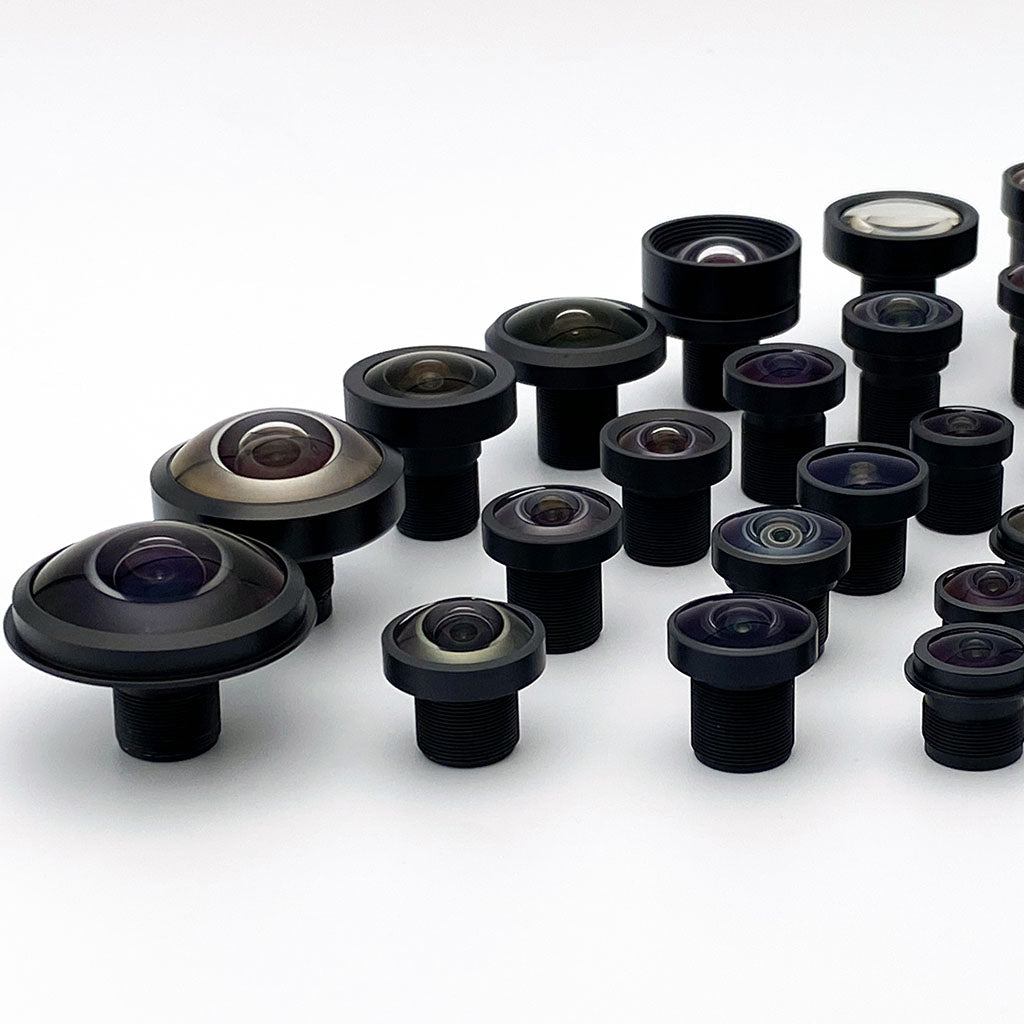

Robuste Objektive für die industrielle Bildverarbeitung: Thermische Stabilität, hydrophobe Beschichtungen und Vibrationsfestigkeit
Thermal stability, hydrophobic coatings, and vibration resistance define what makes a machine vision lens ruggedized, not an IP rating alone. This guide covers athermalization, all-glass versus hybrid construction, and how to validate a lens for outdoor, automotive, and industrial deployments.

Ein robustes Bildverarbeitungsobjektiv zeichnet sich nicht allein durch eine IP-Schutzart aus. Es vereint Staub- und Wasserdichtigkeit, eine Konstruktion, die den Fokus auch bei Temperaturschwankungen beibehält, eine Beschichtung der Frontlinse, die Wasser abweist und verschmutzungsresistent ist, sowie eine validierte Leistungsfähigkeit nach realen Vibrations-, Stoß- und Temperaturwechselprüfungen. Die Robustheit gilt für ausgewählte M12-Objektive und ausgewählte C-Mount-Objektive, die speziell dafür entwickelt und getestet wurden, nicht jedoch für jedes Objektiv dieser beiden Anschlussfamilien.
Was zeichnet ein robustes Objektiv für die industrielle Bildverarbeitung aus?
| Eigenschaft | Wovor es schützt | Was es nicht löst |
|---|---|---|
| Eindringschutz (IP-Schutzklasse) | Staub und Wasser, die über Gewinde- und Verbindungsstellen in den Zylinder eindringen | Thermische Defokussierung, vibrationsbedingte Fokusverschiebung, Wasserfilm auf der Vorderseite |
| Konstruktion aus Vollglas mit Aluminiumgehäuse | Contributes to lower, more predictable thermal drift when the full design balances CTE and dn/dT, not a guarantee on its own | Eindringen von Feuchtigkeit (eine Glaslinse in einem nicht abgedichteten Gehäuse lässt weiterhin Feuchtigkeit eindringen) |
| Wasserabweisende Frontbeschichtung | Water film and rain-drop scatter on the front element. Surface contamination buildup | Eindringen von Feuchtigkeit aus dem Inneren, chemische Korrosion, mechanische Einwirkungen |
| Umgebungsvalidierungstests | Confirms resolution and focus position after real stress exposure, surfacing seal or adhesive failure modes before deployment | Laufende Instandhaltung und Überwachung vor Ort |
Ruggedization is a select-product property, not a mount-family property. Most products in the Commonlands M12 and C-mount collections are specified for stable indoor conditions and standard handling, so treat any description that calls a lens rugged, without the specifics its environment demands, as unverified until confirmed with the supplier.

Wie wirkt sich die Temperatur auf die Fokussierung von Objektiven in der industriellen Bildverarbeitung aus?
Temperature change moves a lens's focal plane through three simultaneous first-order mechanisms, together called thermal defocus. The barrel and internal spacers expand or contract by their coefficient of thermal expansion (CTE). The glass refractive index shifts with temperature, a property called dn/dT. The glass elements themselves change radii and thickness, which alters their optical power.
An aluminum barrel runs roughly 23 ppm/°C against 7–9 ppm/°C for optical glass, so it expands about three times faster than the glass it holds. Axially, that mismatch changes element spacing and the flange-to-sensor distance, which moves the rear focal point. Whether it dominates thermal defocus or is partly cancelled by dn/dT depends on the design. The same mismatch also loads mounts and bond lines radially, adding asymmetric aberration and, over many cycles, bond fatigue.
The sensor does not hold still either. Sensor die, PCB, standoffs, mount, and housing all expand on their own coefficients, so what defocuses the system is the relative motion between the lens focal plane and the sensor surface, combined with the index change inside the glass. Model the optics and the mechanics as one stack rather than treating the sensor as a fixed reference.
Polycarbonate's dn/dT is much larger and opposite in sign. A cost-driven hybrid not engineered for cancellation drifts more, and less predictably, than an all-glass design where every element expands at a similar, characterizable rate.
Confirm the datasheet operating temperature range rather than assuming from construction type. The magnitude of focus shift scales with the temperature swing from the calibration point. Its direction is design-dependent, set by a given lens's materials and element positions, not a universal rule.
Compare expected thermal focus shift to your system's depth of focus, the image-side focus tolerance. The Commonlands depth-of-field calculator handles the separate object-side depth of field.
Thermal cycling also pumps moisture: an unsealed lens draws in humid air as it cools, and condensation forms haze that no refocusing recovers, which IP sealing sharply reduces. Specify for the real surface temperature, including solar load on a dark housing (which can add 20–30°C in direct sun) and sensor self-heating, then request thermal focus shift data in microns per 10°C and compare it against your depth of focus.
Was ist eine athermische Linse?
An athermal lens is an optical assembly designed so the focal-plane position stays close to its set point across a wide temperature range. Athermalization means thermal drift has been intentionally reduced, not eliminated, to a level that keeps the image within the system's acceptable sharpness window across the rated range.
It is a design property, not a separate product category. A well-athermalized Commonlands M12 lens for outdoor use holds closer to its focus set point across temperature because its materials and layout were chosen so thermal contributions largely cancel. All-glass construction alone does not establish lower drift. The prescription, material dn/dT, barrel and holder expansion, and sensor movement determine the result. Check measured focus and MTF across the operating temperature range.
Passive athermalization uses material selection and element positioning so mechanical and optical thermal effects partially cancel: barrel materials chosen for CTE compatibility (stainless steel around 17 ppm/°C, titanium around 8.6 ppm/°C, or Invar around 1.2 ppm/°C for the most demanding cases) and spacer geometry chosen deliberately. It needs no motor or power. Focus is fixed at installation and holds passively.
Was ist eine hydrophobe Linsenbeschichtung?
A hydrophobic lens coating is a water-repellent surface treatment, typically a thin fluoropolymer or modified-silica layer, applied to the front outer surface of the first optical element. It lowers the surface energy of the glass so water beads and rolls off rather than spreading into a continuous film. A water film across the front element scatters and refracts incoming light, reducing contrast and producing soft or hazy output. Beaded water covers less surface area and clears more easily.
| Coating | Mechanism | Water source it addresses | Wrong choice when |
|---|---|---|---|
| Hydrophobic | Lowers surface energy so water beads and rolls off | External rain, road spray, and wash-down on the front element | The water comes from internal condensation |
| Hydrophilic anti-fog | Encourages water to spread into an optically uniform film | Enclosed condensation and fogging on a surface | Specified for rain or splash without wetting, durability, and contamination testing on the actual exposure |
| BBAR (broadband anti-reflective) | Reduces Fresnel reflection and flare at air-glass interfaces | None. It manages light throughput, not water | Used as a stand-in for water management |
Neither wetting strategy is automatically right outdoors. A hydrophobic surface sheds beads faster, while a hydrophilic anti-fog surface can hold a thin, optically uniform film instead of the scattering droplets that a partly wetted surface produces. Which one wins depends on the surface, the contamination present, and how the coating ages, so test both against the exposure the camera will actually see.
Hydrophobic coating is a durability and image-quality hedge, not a guarantee. It reduces how much of the front surface stays wet and shortens the time before water clears, but it does not make a lens immune to heavy rain, and it does not seal the barrel: water can still reach internal optics through an unsealed thread interface. Persistent contamination such as mineral deposits still requires physical cleaning.
Evaluating a datasheet claim means checking that the coating is specified on the front outer surface rather than an internal element, confirming a separate IP rating exists if barrel ingress is a risk, and reading any stated water contact angle in context: above about 90° is the conventional hydrophobic boundary, but a single static angle does not establish shedding performance on its own.
Wo sich eine hydrophobe Beschichtung bezahlt macht
The clearest cases are forward-facing outdoor cameras in rain or spray (vehicle-mounted, agricultural, or traffic cameras) and wash-down lines in food, beverage, and pharmaceutical plants. There, the front element must shed residual water quickly after each cleaning cycle rather than carrying a film into the next. A hydrophobic-coated front element also helps shed airborne particulates between cleanings, which extends the interval before manual cleaning. Oil resistance is a distinct, oleophobic property that not every hydrophobic coating provides, so confirm it on the datasheet when oils are a concern.
Vibration, Stoßbelastung und mechanische Stabilität
Vibration and shock affect a machine vision lens through three failure modes: focus-lock adhesive loosening, internal elements shifting under sustained vibration load, and the barrel-to-camera thread interface working loose. Vehicle-mounted cameras, conveyor-mounted inspection systems, robotics, and any mount with continuous mechanical disturbance put a lens through this stress continuously. It is not an occasional event.
Mobile robotics combines continuous motor and wheel vibration with thermal cycling from motor and battery heat and repeated shock from uneven terrain. For robot-mounted and vehicle-mounted systems, request vibration and shock qualification data from Commonlands rather than treating vibration resistance as implied by sealed, all-glass construction. Sealing and thermal stability do not confirm that bonded elements hold position under sustained mechanical load.
Wann reicht ein versiegeltes Objektiv aus, und wann ist ein Gehäuse dennoch wichtig?
An external housing is still needed when retrofitting existing camera hardware with no IP protection of its own, when the deployment environment exceeds what the lens IP rating covers, or when the application requires protection beyond ingress sealing. That protection might mean EMI shielding, resistance to a specific solvent, or a serviceable protective window in front of the optics.
A housing carries real costs: a protective window adds two air-glass surfaces (roughly 8% transmission loss uncoated, versus about 1% with a BBAR coating), and enclosures typically add 200–500g and meaningful bulk, which matters for drones and robot arms. Where the environmental requirement is known from the start and ingress is the whole of it, a sealed Commonlands lens paired with a sealed camera module often costs less and images better than adding an enclosure.
The trade reverses as soon as the requirement widens. Impact protection, chemical exposure, EMI shielding, pressure or altitude limits, a sacrificial window that a technician can replace in the field, and serviceability generally all favor a housing, and the qualification that decides the argument is run on the assembled system rather than on the lens alone.
Beispiele für robuste Objektive von Commonlands
Top 3 ruggedized machine vision lenses
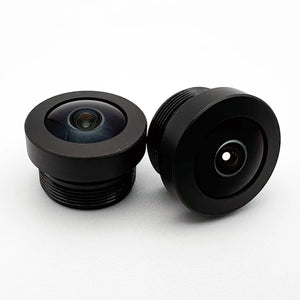
Commonlands builds and tests a select group of M12 lenses for harsh environments. The three below each carry a verified ingress rating, from IP67 immersion sealing up to IP69K, the shorthand for ISO 20653's IP6K9K jet rating. Most Commonlands lenses are specified for stable indoor conditions and standard handling, so ruggedization is a per-SKU property confirmed on each product page, never a family-wide guarantee. The automotive M12 collection filters to the sealed, wide-temperature-range models. The best M12 lenses for machine vision ranking adds catalog context.
| Rang | Objektiv | Montage | Abdichtung | Hinweis zur thermischen Stabilität | Typical evaluation fit |
|---|---|---|---|---|---|
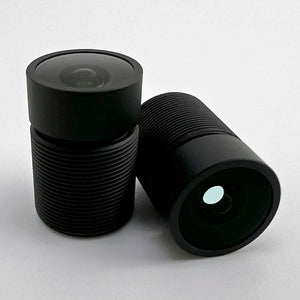
| 1 | CIL190 (19 mm) | M12 | IP69K | Sealed washdown barrel. Confirm thermal range on the datasheet | Inspektion von Reinigungsvorgängen in der Lebensmittel- und Pharmabranche bei größerem Sicherheitsabstand |
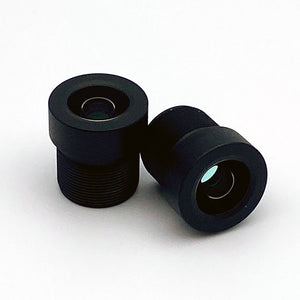
| 2 | CIL034 M12A (3.2mm) | M12 | IP67 | Hybrid 4G2P in an aluminum barrel. Request thermal focus shift data | Allgemeine Bildgebung im Außenbereich und in der Industrie mit versiegelten Kameras |
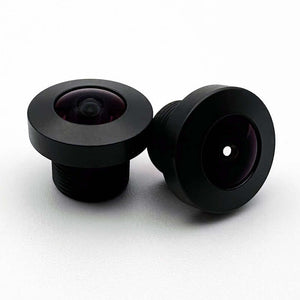
| 3 | CIL079 (7.8mm) | M12 | IP67 | Athermisiert, vollständig aus Glas, versiegelt | Bildgebung im mittleren Bereich in der Landwirtschaft und auf Fahrzeugen |

Technical references
Häufig gestellte Fragen
Select Commonlands lenses carry IP-rated sealing and thermally stable construction. These answers define what ruggedized actually means.
Wie wirkt sich die Temperatur auf die Fokussierung von Objektiven in der industriellen Bildverarbeitung aus?
Temperature changes refractive index, lens dimensions, barrel and holder spacing, and sensor position. The combined effects can move best focus in either direction. Passive athermalization balances optical and mechanical contributions. Active refocus can compensate temperature-induced defocus when the system permits it. Material labels alone do not establish performance, so measure focus and MTF across the operating temperature range.
Was ist eine athermische Linse?
An athermal lens is an optical assembly designed so thermal focus shift is reduced, not eliminated, keeping the image within an acceptable sharpness window across the rated temperature range. Passive athermalization uses material choice and element spacing so mechanical and optical thermal effects partially cancel rather than add. It requires no motor or power. Active refocus can compensate the same temperature-induced defocus by adjusting focus during operation. It is an alternative to passive compensation when the system permits that adjustment.
Was ist eine hydrophobe Linsenbeschichtung?
A hydrophobic lens coating is a water-repellent surface treatment, typically a thin fluoropolymer or silica-based layer, applied to the front outer surface of a lens. It lowers surface energy so water beads and rolls off instead of spreading into a film that scatters light and reduces contrast. It sheds water and resists surface contamination between cleaning cycles. It is a durability hedge, not a guarantee against every contamination or ingress condition, and it does not replace barrel sealing.
Ist eine hydrophobe Beschichtung ein Ersatz für eine IP-Schutzart?
No. Hydrophobic coating treats the front outer surface only. It does not seal the barrel, thread interface, or focus-ring joints against water or dust ingress. An unsealed lens with a hydrophobic front element still admits moisture internally. IP sealing and hydrophobic coating are complementary features that commonly appear together on the same product but address different failure modes. See IP ratings for machine vision lenses for the sealing side of the picture.
Gelten alle M12- oder C-Mount-Objektive als robust?
No. Ruggedization (sealing, thermally stable construction, hydrophobic coatings, and vibration validation) applies to select lenses within both the M12 and C-mount families that were specifically built and tested for it. A standard indoor-rated lens in either mount family is not automatically suitable for outdoor or washdown use. Check the specific product's IP rating, construction materials, and coating specs before assuming ruggedized capability.
Benötigen Sie Hilfe bei der Auswahl eines robusten Objektivs für Ihren Einsatz?
Bitte senden Sie Ihre Angaben zu Sensor, Halterung, Temperaturbereich und Schutzart an die technische Abteilung von Commonlands. Wir werden Ihnen dann mitteilen, ob eine standardmäßige versiegelte Linse Ihren Anforderungen entspricht oder ob eine zusätzliche Validierung erforderlich ist.