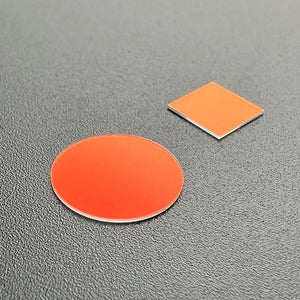
Optical Filters | Bandpass, IR Cut & Dualband Filters for Machine Vision | Commonlands

Optical Filters for Embedded Machine Vision

Bandpass, IR cut, and dualband day/night filters engineered for CMOS sensors. Integrate directly with M12 lenses for compact camera modules.

From single-wavelength bandpass filters to dual bandpass day/night solutions, our optical filters provide spectral control for embedded vision. Available with M12 lens bonding services for turnkey camera module integration.

350-1100nm Wavelength Range
Same Day Shipping
M12 Ready Lens Integration
Optical Filters - Bandpass IR Cut Dualband Filters
US Stock

Understanding Optical Filter Types

Essential definitions for selecting the right filter for your machine vision application

🎯

Bandpass Filter

Transmits a specific wavelength range while blocking all others. Defined by center wavelength (CWL) and bandwidth (FWHM). Essential for isolating LED or laser illumination in machine vision to maximize signal-to-noise ratio.

  • • Typical FWHM: 10-50nm
  • • Blocking: OD4+ (99.99%)
  • • Applications: Inspection, barcode reading
🔴

IR Cut Filter

Blocks infrared wavelengths above ~650nm to produce accurate color reproduction matching human vision. Prevents IR light from desaturating colors on CMOS sensors that are inherently IR-sensitive.

  • • Cut-off: 650nm typical
  • • High visible light transmission
  • • Applications: Color cameras, RGB imaging
🌓

Dualband / Day-Night Filter

Dual bandpass filter transmitting visible (400-700nm) and NIR (typically 850nm or 940nm) bands simultaneously. Eliminates mechanical IR cut switchers for 24/7 surveillance with automatic day/night transition.

  • • Dual passband architecture
  • • No moving parts required
  • • Applications: Surveillance, automotive ADAS
⬆️

Longpass Filter

Transmits wavelengths above a specified cut-on point while blocking shorter wavelengths. Used for NIR imaging, fluorescence applications, and blocking visible light for covert illumination systems.

  • • Cut-on wavelengths: 700-1000nm
  • • Sharp edge transition
  • • Applications: NIR vision, covert surveillance
⬇️

Shortpass Filter

Transmits wavelengths below a specified cut-off point while blocking longer wavelengths. Blocks IR contamination in visible imaging or isolates UV/blue wavelengths for specialized inspection applications.

  • • Cut-off wavelengths: 400-700nm
  • • Heat rejection capability
  • • Applications: UV inspection, heat blocking

Neutral Density (ND) Filter

Reduces light intensity uniformly across all wavelengths without affecting color balance. Used to prevent sensor saturation in high-brightness conditions or extend exposure times for motion blur applications.

  • • Optical density: ND2 to ND1000
  • • Spectrally neutral response
  • • Applications: Outdoor cameras, welding inspection

Filter Transmittance Data

Measured spectral response curves for Commonlands optical filters. Click to download the complete dataset.

Optical Bandpass Filter Transmittance Measurements - Spectral Response Curves

Spectral transmittance curves for bandpass and dualband filters. Click image or button below to download Excel data.

Dualband vs Regular Optical Filters

Understanding when to use dual bandpass day/night filters versus standard IR cut filters

Characteristic Regular IR Cut Filter Dualband Day/Night Filter
Daytime Operation Blocks all IR for accurate color imaging Passes visible band for color imaging
Nighttime Operation Requires mechanical removal of filter (ICR switcher) Passes NIR band (850nm or 940nm) simultaneously
Moving Parts Yes - IR cut filter switcher required None - fully solid-state operation
System Complexity Higher - motor driver, mechanical assembly Lower - single fixed filter element
Failure Modes Motor failure, mechanical wear, stuck filter Minimal - no moving components
Color Accuracy Excellent - full IR blocking during day Good - slight NIR leakage in visible band
Cost Filter low cost, but ICR switcher adds expense Higher filter cost, lower total system cost
Best Applications Color-critical imaging, studio cameras 24/7 surveillance, automotive, outdoor IoT

Optical Filter + M12 Lens Integration

Eliminate separate filter holders by bonding optical filters directly to M12 lens assemblies. Our cleanroom filter bonding service creates compact, sealed optical modules for embedded vision applications where space and reliability are critical.

Filter-lens integration prevents dust contamination, ensures optical alignment, and simplifies camera module assembly. Available for prototype through volume manufacturing with 100% optical testing.

Compact form factor
Sealed optical path
Dust contamination prevention
Serienreife Produktion
UV/thermisch härtende Verklebung
Reinraum der Klasse 1000

Filter Gluing Service Pricing

$100 one-time NRE + per-unit bonding fee. Add filters and lenses to cart, then add the gluing service for your quantity.

Add Filter Gluing Service to Cart →

Need Mechanical Day/Night Switching?

For applications requiring complete IR blocking during daytime, we also offer mechanical IR cut filter switchers (ICR) that physically move the filter in and out of the optical path.

Browse IR Cut Switchers & Accessories →
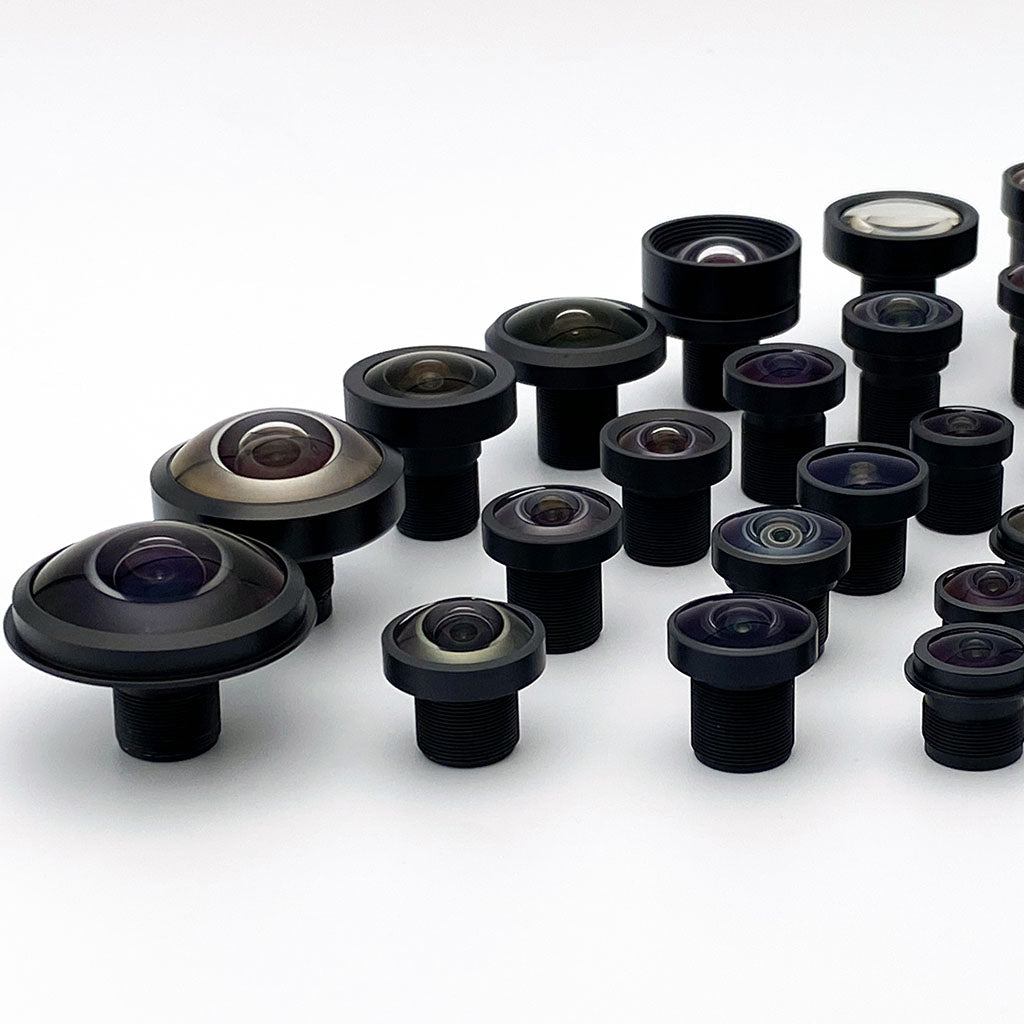
M12 Lenses for Optical Filter Integration
Camera Module Assembly with Integrated Filters

Custom Optical Filters for Volume Projects

Need a specific center wavelength, bandwidth, or form factor not in our standard catalog? Commonlands offers custom optical filter manufacturing for projects exceeding 1,000 pieces. Our coating partners can develop custom spectral profiles to match your exact requirements.

Custom Wavelengths

  • • Specific center wavelength (CWL)
  • • Custom bandwidth (FWHM)
  • • Multi-band passband profiles
  • • Application-matched spectral curves

Custom Form Factors

  • • Non-standard diameters
  • • Square or rectangular shapes
  • • Custom thickness requirements
  • • Integrated mounting features

Integration Services

  • • Filter-to-lens bonding
  • • Camera module assembly
  • • Custom packaging
  • • Traceability documentation

NRE & Minimum Order Quantities

Custom optical filter development requires non-recurring engineering (NRE) fees to cover coating design, test runs, and spectral verification. NRE is typically quoted based on complexity and is often credited against production orders. Minimum order quantities for custom filters start at 1,000 pieces. Contact our engineering team for a detailed quote.

Request Custom Filter Quote

How to Select the Right Optical Filter

Choosing the optimal optical filter requires understanding your application's spectral requirements, environmental conditions, and integration constraints. This engineering guide covers the key selection criteria for machine vision and embedded camera applications.

Application-Based Selection

  • Color Imaging (RGB Cameras) Use IR cut filters with 650nm cut-on to block near-infrared light that desaturates colors. CMOS sensors are inherently IR-sensitive, so IR blocking is essential for accurate color reproduction matching human perception.
  • Machine Vision with LED/Laser Illumination Select bandpass filters matching your illumination wavelength (typically 850nm, 940nm for NIR or visible wavelengths for color LED). Narrow FWHM (10-25nm) maximizes contrast by rejecting ambient light while passing structured illumination.
  • 24/7 Surveillance Systems Dualband day/night filters enable seamless transition between visible daytime imaging and NIR nighttime operation without mechanical IR cut switchers. Choose 850nm passband for visible glow illumination or 940nm for covert applications.
  • NIR-Only Imaging Longpass filters (780nm+ cut-on) block visible light for covert surveillance, agricultural imaging (NDVI), or silicon wafer inspection where NIR penetration is required.

Technical Specifications to Consider

  • Center Wavelength (CWL) & Bandwidth (FWHM) For bandpass filters, CWL should match your illumination source within ±5nm. FWHM determines selectivity—narrower bandwidth provides better ambient rejection but requires precise wavelength matching. Typical machine vision FWHM ranges from 10nm (narrow) to 50nm (wide).
  • Optical Density (OD) & Blocking OD4 (99.99% blocking) is standard for machine vision. Higher OD needed for applications with strong out-of-band signals. Verify blocking across your sensor's full spectral sensitivity range, not just visible wavelengths.
  • Angle of Incidence (AOI) Interference filters blue-shift at off-axis angles. For wide-angle lenses (>60° FOV), consider specialized wide-angle interference coatings to maintain consistent spectral response across the field of view.
  • Physical Dimensions & Mounting Filter diameter must exceed your lens clear aperture. For M12 lens integration, typical filter sizes are 4.5mm to 8mm diameter. Verify thickness compatibility with available back focal distance in your optical stack.

Optical Filter Technical FAQ

Common questions from embedded vision engineers

What is a bandpass filter and how does it work?
A bandpass filter is an optical component that transmits light within a specific wavelength range while blocking all other wavelengths. It works by combining longpass and shortpass filter characteristics, defined by center wavelength (CWL) and full width at half maximum (FWHM). For machine vision, bandpass filters isolate specific LED or laser wavelengths to improve contrast and reduce ambient light interference. For example, an 850nm bandpass filter with 25nm FWHM transmits wavelengths from approximately 837.5nm to 862.5nm.
What is a dualband filter or dual bandpass filter?
A dualband filter (also called dual bandpass or day/night filter) transmits two separate wavelength bands—typically visible light (400-700nm) and near-infrared (850nm or 940nm). This enables cameras to capture color images during daylight while automatically switching to IR illumination at night without mechanical filter switching. Dualband filters eliminate the IR cut filter switcher mechanism, reducing cost, size, and potential failure points in surveillance and automotive vision systems.
What is the difference between a dualband filter and a regular IR cut filter?
A regular IR cut filter blocks all infrared light above ~650nm cut-off to produce accurate daytime color images, but requires a mechanical IR cut filter switcher (ICR) to remove the filter for nighttime NIR imaging. A dualband filter passes both visible AND a specific NIR band simultaneously, eliminating the need for mechanical switching. Dualband filters enable 24/7 operation with no moving parts, while IR cut + switcher systems provide better color accuracy but add mechanical complexity.
Can optical filters be integrated with M12 lenses?
Yes, optical filters can be permanently bonded to M12 lens assemblies using UV-cure or thermal-cure adhesives. This filter-lens integration eliminates separate filter holders, reduces system size by 30-50%, prevents dust contamination, and ensures optical alignment. Commonlands offers filter gluing services with a $100 one-time NRE plus per-unit bonding fee, supporting both prototype and volume manufacturing up to 10,000 units per month.
Can Commonlands manufacture custom optical filters?
Yes, Commonlands offers custom optical filter manufacturing for projects exceeding 1,000 pieces. Custom filters include specific center wavelengths, bandwidth requirements, and form factors. Non-recurring engineering (NRE) fees apply for custom coating development to cover design, test runs, and spectral verification. NRE is often credited against production orders. Contact our engineering team to discuss your spectral requirements and receive a custom quote.
What is a day/night filter for surveillance cameras?
A day/night filter is a dualband optical filter that passes both visible light (for daytime color imaging) and near-infrared light (for nighttime IR illumination) without requiring a mechanical IR cut filter switcher. This simplifies camera design, reduces cost, and eliminates moving parts that can fail. Day/night filters are standard in modern IP surveillance cameras, automotive surround-view systems, and any application requiring seamless 24/7 operation. Common variants include VIS+850nm (visible IR glow) and VIS+940nm (covert, invisible IR).

Ready to Integrate Optical Filters?

From individual filters to complete filter-bonded M12 lens assemblies—US stock with same-day shipping and engineering support.

Request Custom Filter Quote

Connect with our California-based engineering team for custom wavelengths and filter-lens integration

Kontakt

Verbinden Sie sich mit unserem technischen Team in den USA